
Successful GIS Workflow Expansion Relies on Support System Evolution
February 27, 2026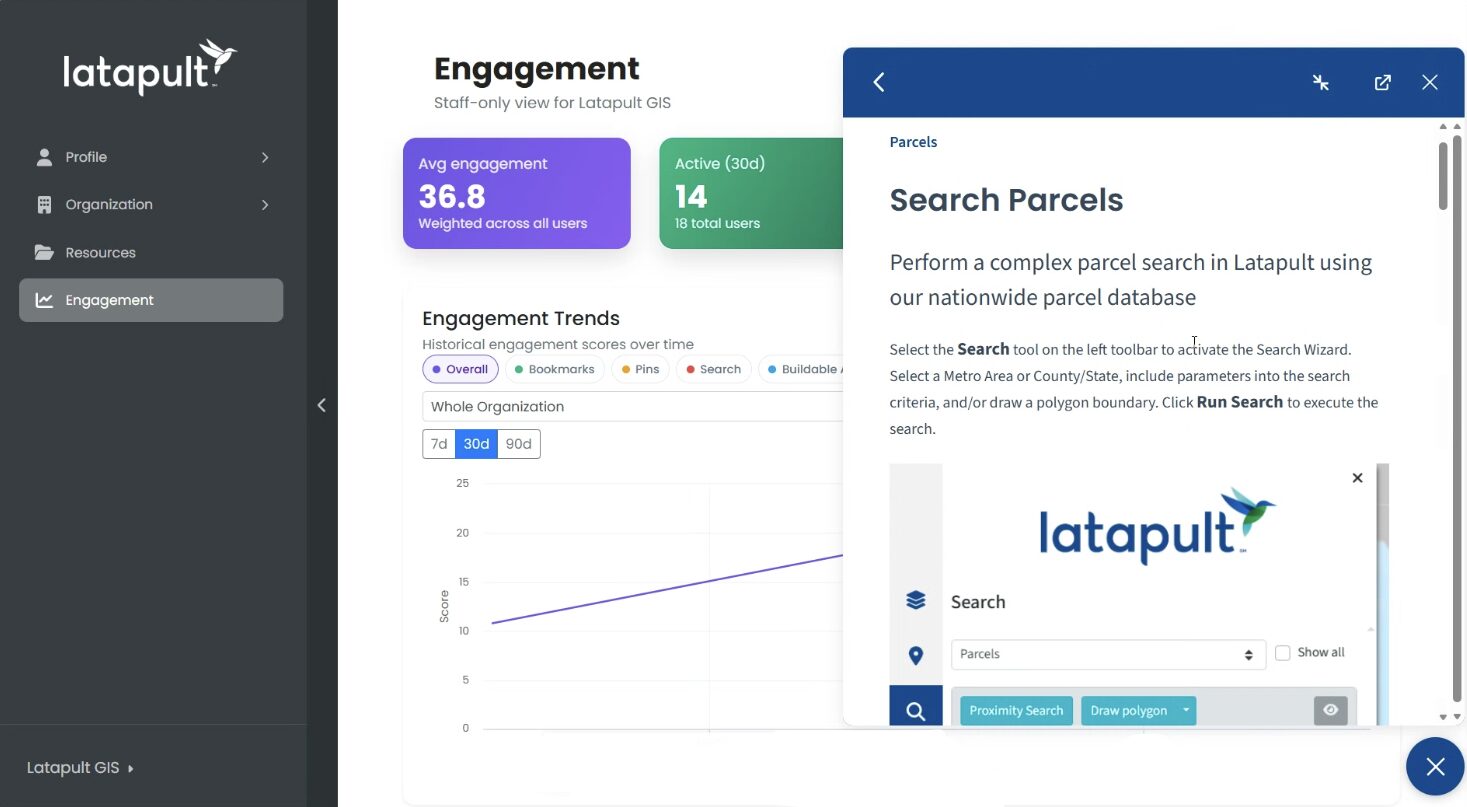
The global GIS market is expected to double in size, from about $12 billion currently to over $26 billion by 2035. That growth reflects the increasing role of GIS in operational planning across industries that didn’t rely on spatial analysis a decade ago. Today, the uses of technology are endless. Renewable energy teams need it to evaluate land. Civil engineers use it to design highways. Residential and commercial developers depend on it to assess site viability. As GIS adoption expands into more sectors, professionals need faster ways to solve problems, build expertise, and make confident decisions — which is why Latapult has launched an on-demand Support Portal.
Simply using GIS software doesn’t guarantee speed or accuracy. The way teams receive support, resolve issues, and learn new capabilities is truly what moves projects forward and maintains timelines. Systems that depend on email help tickets and 24-hour response times create bottlenecks that GIS teams can’t afford. An analyst who hits a roadblock when evaluating potential sites could miss a critical window of opportunity while waiting even a few hours.
The efficiency gains provided by expanding GIS workflows depend on support strategies that prioritize proactive, on-demand assistance rather than reactive troubleshooting. Teams need instant access to answers, embedded learning resources, and intelligent tools to stay on track.
The Ongoing Costs of Delayed Workflows Are Significant
Time-to-decision is now a competitive advantage. In industries like residential real estate development and economic development, delaying a site selection decision by a day can mean losing a prime location to a competitor. In renewable energy, a stalled land-use analysis can push back an entire project timeline, affecting financing and regulatory deadlines. The challenge isn’t just speed, though — it’s complexity.
GIS projects now require the simultaneous analysis of environmental, demographic, and topographic layers. A single question about how to overlay data sets or export data in the right format can interrupt an entire workflow. If the question necessitates the submission of a help ticket, delays may ripple through the project as users await a response.
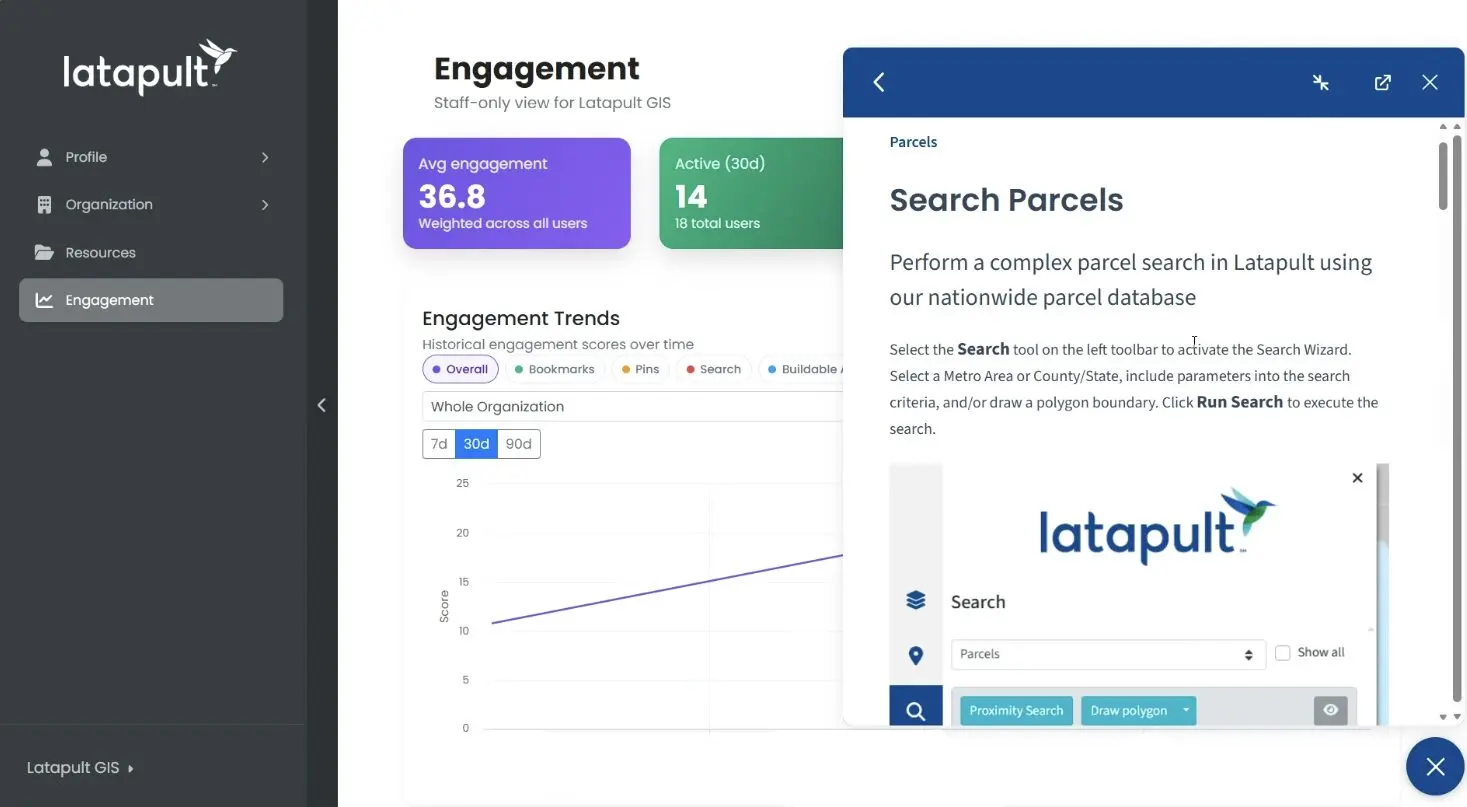
Latapult’s new self-service Support Portal eliminates the need for that help ticket by allowing users to access embedded learning resources and confirm the best data overlay methods without waiting for a support team to step in. As a result, the project stays on track, the opportunity remains viable, and the user gains confidence in the process.
GIS Users are Everywhere — Support Should Be, Too
GIS has become an organization-wide tool, integrated into daily applications across departments and geographies. Collaborators — including planners, consultants, engineers, and analysts — all interact with GIS platforms, often from different locations and time zones.
For example, a wind farm project manager in one location can access Latapult’s self-service knowledge base to troubleshoot GIS data export challenges, while a consultant in another time zone uses the same platform to learn how to analyze topographic layers. This eliminates the dependency on a single expert and keeps workflows moving seamlessly across an organization.
Relying on a single power user to answer every question or help with challenges creates a dependency that slows everyone down. When the team’s sole expert is unavailable, projects can stall. And if multiple people request assistance simultaneously, bottlenecks form.
Knowledge Bases Are as Critical as the Maps Themselves
A reliable, comprehensive knowledge base supports immediate problem-solving without requiring a human representative. Centralized hubs for help articles, step-by-step workflows, and instant answers keep workflows intact while introducing users to new approaches, tools, and methods they may not have previously considered.
Support shouldn’t just fix issues — it should expand users’ understanding of the platform’s capabilities and showcase functionality they weren’t aware of. As collaborators gain insight and confidence, their comfort level with technology will help prevent many issues before support is ever needed.
For teams managing large-scale infrastructure projects, Latapult’s knowledge base provides instant clarity. When a GIS analyst needs to quickly learn how to manage attribute data for a highway expansion project, our step-by-step guides deliver support in seconds. The analyst saves time and gains skills to handle similar tasks independently in the future.
Centralized knowledge hubs also ensure consistency. Every team member accesses the same accurate, up-to-date information, while tools like the Latapult data change log provide visibility into when property and infrastructure datasets are updated, refined, or expanded. This transparency reduces confusion and improves coordination across projects.
On-Demand Support Portals are Your New GIS Partner
Innovative support solutions built for speed and autonomy will create a highly efficient, engaged GIS workforce. Features like AI-driven agents, like Latapult’s very own Coco, can surface relevant GIS data documentation instantly and act as force multipliers so teams can stay focused rather than hunting for help.
Latapult’s new GIS Support Portal integrates directly with the knowledge base to answer complex questions about drawing polygons, managing attributes, or exporting data — without leaving the ecosystem. Cocofetches answers immediately, reducing downtime and keeping projects on schedule.
The portal also tracks user progress through specific workflows via engagement scores. These built-in tours walk users through how to apply Latapult’s tools, demonstrating how individual capabilities can be used together to complete specific tasks. As users work through the guided experiences, they build their own workflows based on what they learned — combining new methods and tools to better support their project goals. The engagement scores help managers ensure their teams are fully utilizing the platform and highlight opportunities for additional training.
As the GIS market doubles in size, the tools available must support the people using them, not just process the data. Latapult’s new portal reduces friction, allowing organizations to onboard faster and execute site selection and analysis with confidence.
Treat Support as a Strategic Asset to Outpace the Competition
Today’s high-stakes GIS market demands support that matches the pace of decision-making. And with distributed collaborators, complex datasets, and tight timelines, there’s no room for delays caused by outdated models.
On-demand portals are strategic assets that enable GIS teams to work faster, learn continuously, and deliver strong results. Support systems that evolve right alongside workflows offer users convenient opportunities to realize the value of their platforms and stay ahead of the competition.
Take advantage of Latapult’s Support Portal to keep your GIS workflows moving. Explore the resources available to your team or schedule a call to see how we can help you work faster with smarter support.